The recycling industry does not have a technology problem. It has an understanding problem.
The equipment exists to wash, granulate, extrude and remanufacture rigid plastics at scale. The demand for recycled content is growing, driven by the Plastic Packaging Tax, Extended Producer Responsibility and corporate sustainability commitments. What continues to hold the sector back is a persistent gap between what people believe about recycling and what actually happens.
Closing that gap is not a communications nicety. It is core operational and commercial work. And it is why IPL Brightgreen treats recycling education, both on site in Castleford and externally across the industry, as a strategic priority rather than an optional extra.
Misinformation costs the industry real money
Public confidence in recycling remains fragile. Surveys consistently show that a significant proportion of UK consumers believe their recycling ends up in landfill or is shipped abroad and dumped. Every headline about waste crime or export failures reinforces that doubt, and doubt changes behaviour. People who do not believe recycling works do not sort their waste carefully. Contaminated feedstock costs reprocessors time, yield and money.
The same problem plays out in commercial decisions. Buyers who do not understand the difference between food grade and non food grade material, or between PP and HDPE, or between mechanical and chemical recycling, make specification choices based on assumption rather than evidence. Sometimes that means over specifying virgin polymer where recycled content would perform identically. Sometimes it means expecting recycled material to do something it cannot. Either way, the circular economy loses.
Facts fix this. Not marketing claims, but verifiable, specific, demonstrable facts: input specifications, processing parameters, pellet quality data, traceability records. When a recycler can show exactly what happens to material from arrival at the weighbridge to despatch as finished pellet, scepticism has nowhere to hide.
Why recycling education starts on site
External credibility is built internally first. A recycler cannot educate the market convincingly if its own people cannot explain the process confidently.
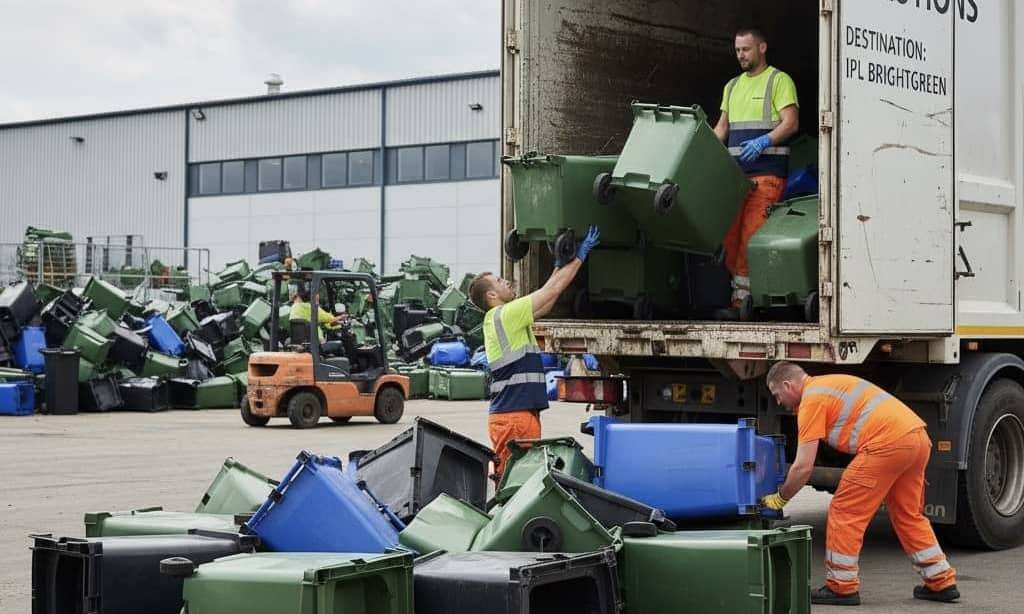
At IPL Brightgreen, that means every colleague, from the yard to the laboratory to the commercial team, understanding not just their own role but the full journey of the material: why input quality matters, how contamination affects the wash plant, what the lab is testing for and why customers specify what they do. When a visitor walks the site, whether a customer, a CIWM delegation or a local school group, the most powerful educational asset is not a brochure. It is a team member who can explain, in plain terms, exactly what is happening in front of them and why it matters.
On site education also drives operational performance. Colleagues who understand the downstream consequences of decisions made at the front end make better decisions. Quality improves. Waste reduces. Safety culture strengthens. Education is not separate from operations; it is how operations improve.
Why it cannot stop at the gate
The recycling industry is regularly defined by people outside it: journalists, campaigners, politicians and commentators, some well informed and some not. If recyclers do not tell their own story, backed by evidence, someone else will tell a version of it, and that version is rarely accurate or fair.
External education takes many forms, and IPL Brightgreen invests in all of them:
Showing the process.
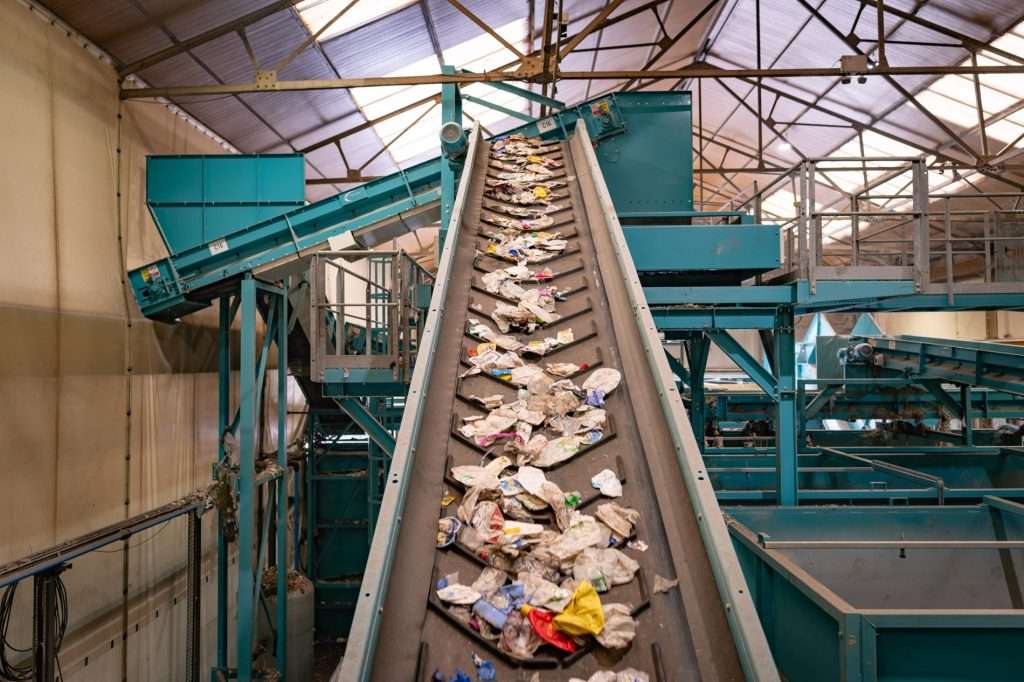
Opening the gates to customers, industry bodies and community groups turns abstract claims into observable reality. Nobody who has watched baled rigid plastic become uniform, tested, specification grade pellet leaves believing recycling is a myth.
Explaining the material.
Content that demystifies polymers, comparing HDPE and PP, explaining what recycled pellet can and cannot do, and setting out how quality is verified, helps buyers specify with confidence and helps brands make honest claims to their own customers.
Engaging with policy.
EPR, the Plastic Packaging Tax and evolving quality standards will shape the sector for a decade. Recyclers who contribute facts and operational reality to those conversations help build regulation that actually works. Recyclers who stay silent inherit rules written without them.
Supporting communities. Beach cleans, school visits and local partnerships are not public relations exercises. They build the informed public that a functioning circular economy ultimately depends on. Every person who understands why a clean, well sorted PP tub is valuable feedstock is a small improvement to the quality of material arriving at every reprocessor in the country.
Credibility is the competitive advantage
Greenwashing scrutiny is intensifying, from the CMA’s Green Claims Code to tightening EU rules. In that environment, the recyclers who thrive will be those whose claims are boring in the best possible way: specific, evidenced and verifiable.
That is the position education and facts build. Not the loudest voice in the market, but the most trusted one. For IPL Brightgreen, continuing to invest in recycling education, on site through a knowledgeable and confident team, and externally through transparent, evidence led communication, is not an add on to the business of recycling. It is how the business of recycling earns its licence to grow.
The industry changes when understanding changes. Recyclers are the ones holding the facts. The responsibility, and the opportunity, is to keep sharing them.